Essay8 min read
Hollywood Dialogues: How American Cinema Influenced Video Art
How does the context of Hollywood kitsch, with its geographical and cultural peculiarities, shape the relationship between mass and avant-garde art in Los Angeles? In this article, we will explore how Hollywood, despite losing its former grandeur, continues to exert influence on culture, art, and cinema—its unique atmosphere serving as a catalyst for the development of avant-garde video art and experimental film.
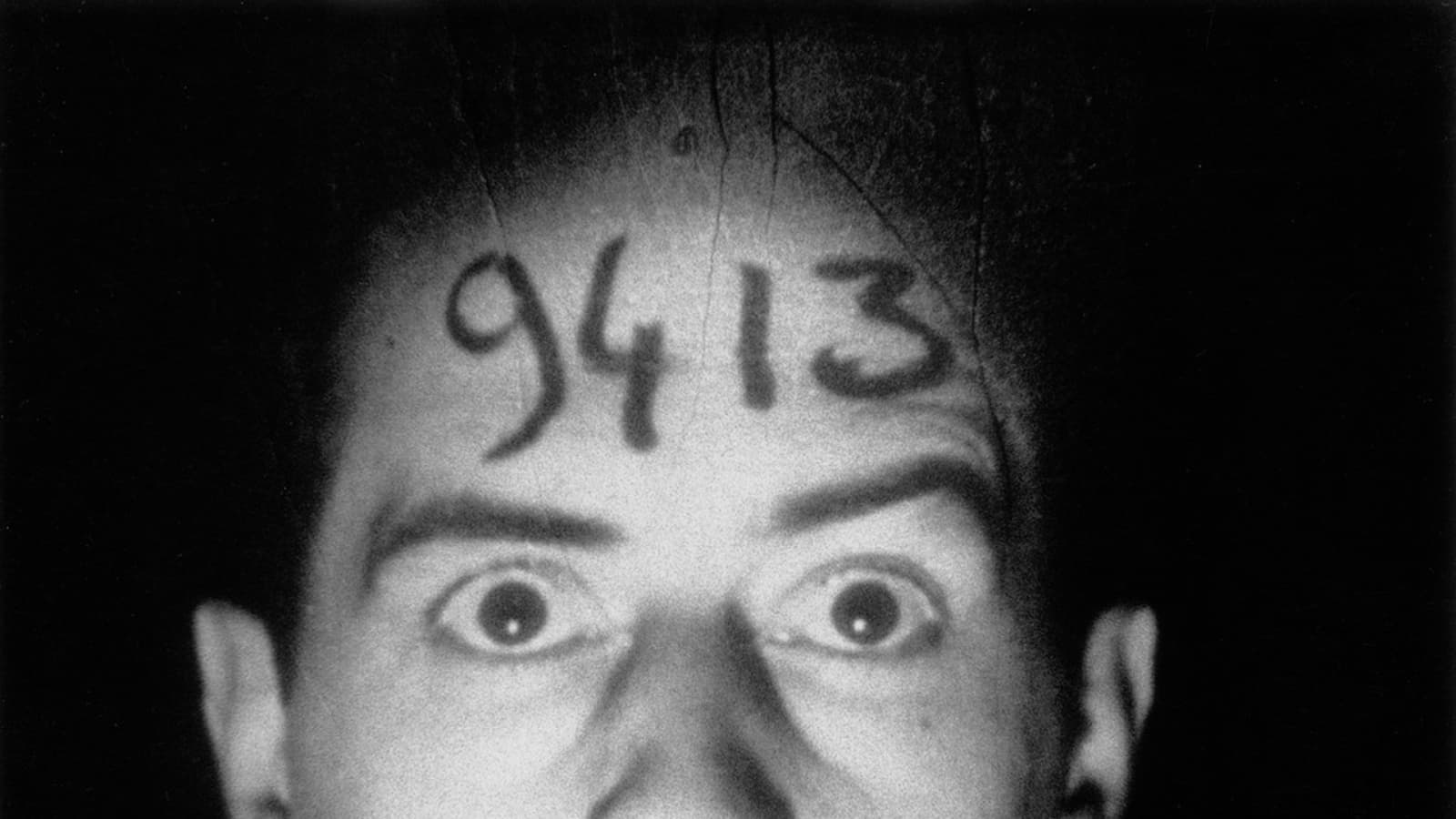
A man in a business suit briskly enters a narrow room. In his hands is a letter, which he nervously hands over to the secretary. The secretary reads it, smirks, and signals to the man, who is mumbling words of gratitude, to be quiet. Taking a stamp in hand, the secretary approaches the man in the suit and carefully imprints an identification number on his forehead: 9413. The man hesitates, exits the office in confusion, and looks around — grotesque skyscrapers surround him, dark, surreal angular forms that induce dizziness, caricatured star emblems everywhere, loud crowds — people with the same kind of identification numbers. An attentive viewer might manage to read the almost naïve phrase in the previously mentioned letter:
“From the artist John Jones… This letter serves to notify that John Jones would like to become a motion picture actor in Hollywood.”
The year was 1928 — the early days of the registered-on-camera American dream.
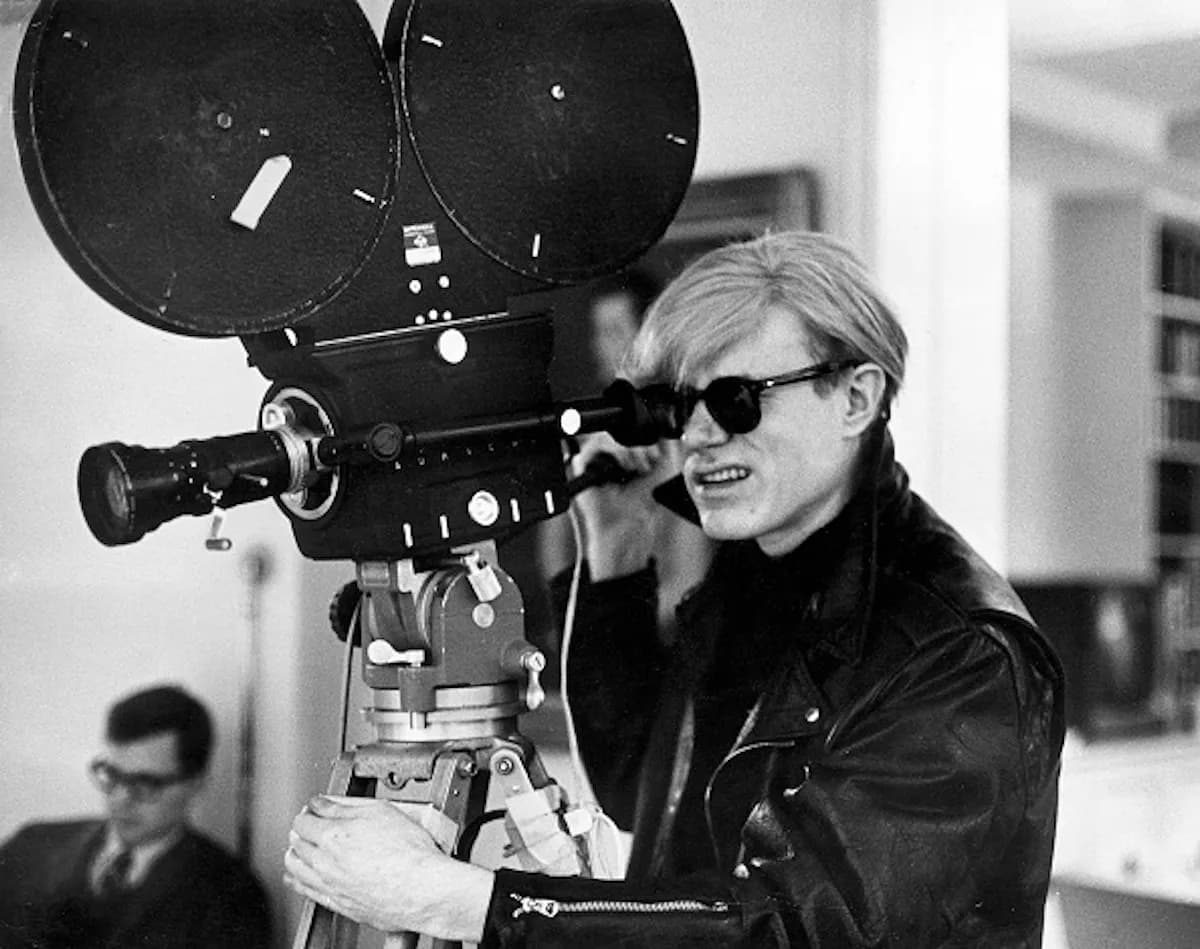
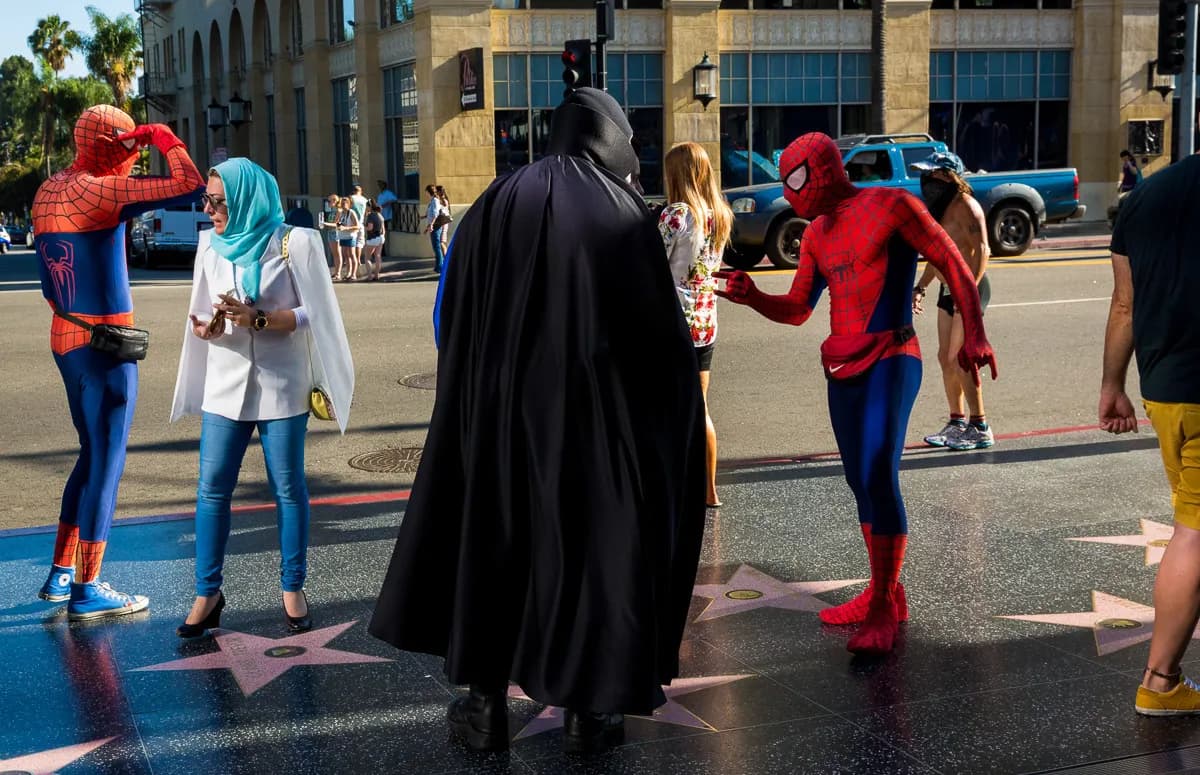
Today, nearly a hundred years later, as I occasionally stroll down Hollywood Boulevards, through the stores, or just out of boredom, I increasingly wonder how much remains of the caricatured grandeur of Hollywood that Robert Florey captured in his short film The Life and Death of 9413, a Hollywood Extra. Hollywood in 2025 is a place loved by some for its casual roughness and by others for its nostalgic remnants of the past. Films haven’t been shot here for a long time, and dozens of historic buildings with neon movie marquees now have “For Lease” signs hanging on them. Locals try to avoid this neighborhood because of the noise, the dirt, the tourists, and the homeless; the homeless are drawn here because of the abundance of tourists; and tourists return to the Walk of Fame in droves because there’s nothing better to do. No modern Los Angeles resident looks down at the granite stars beneath their feet, even if they happen to be passing through the area on business.
Hollywood in 2025 means dirty, reddish buses; Slavic restaurants with inflated prices; decaying buildings; and flâneurs who love the area for its hopelessness.
But here’s the interesting thing: no matter how much time passes, the dystopian surrealism in the air of Hollywood remains — a quality of its dreamlike reality that, for the last hundred years, has drawn the boldest souls back here, like a childhood fairytale, to receive their millionth identification number and spend their lives spinning desperately, hoping to become someone, somehow, for some reason. Hollywood gave society the fantasy that their lives — and they themselves — could become part of some grand, beautiful film.
Hollywood in 2025 isn’t a place; it’s an artistic medium, existing at the edge of popularity and avant-garde, between expense and squalor, balancing on the transition from one to the other — and back again.
As an art historian, I’ve always been fascinated by this Hollywood kitsch that visual art masters from Man Ray to Andy Warhol admired as something important to the development of California’s artistic landscape.
"Empty, meaningless Hollywood," Warhol once recalled, "was everything I ever wanted to shape my life into."
It’s entirely possible that Hollywood’s elite viewing audience, transforming human fantasies into commodities, influenced not only the American cinematic language but also the artistic traditions and visual culture of the Californian avant-garde. The emergence of cinema as both a capitalist product and an integral part of social culture produced this carefree emptiness — a place that, on a metaphysical level, offers the artist room for imagination but has clear geographic boundaries made up of Los Angeles’ crumbling urban landscape. Hollywood allowed artists to strive for separation — to become outcasts standing in opposition to pop culture.
The culture of video art and experimental film, which is no less popular in Los Angeles than traditional cinema, instinctively invites comparison and contrast with Hollywood culture according to Greenberg’s laws of kitsch and avant-garde. But that wouldn’t be entirely accurate.
First, video art as a phenomenon emerged much later than the formation of Hollywood’s “golden” cinematic canon — Sony introduced its first portable camcorder in 1965, and the development of video art, especially in the context of Southern California communities like CalArts students and Andy Warhol’s and Wallace Berman’s circles, is traditionally associated with the accessibility of video, not Hollywood’s cinematic technologies, which remain difficult to access to this day.
Second, conceptually, video art remains quite separate from cinema, as video art’s goal is modernist criticism of the limits and specificity of video as a medium, while cinema tends to aim at creating a narrative and experimenting with what video depicts. It’s unclear whether cinema can even be classified as visual art and whether it exists in the same modality as video art.
Third, training in both practices has historically been divided in Los Angeles, and the spaces for showcasing each tend not to merge: filmmakers don’t want to exhibit in galleries because the audiences there aren’t attentive enough, and video artists rarely show their work in movie theaters because the audiences there are too small.
This raises a natural question: how accurate is it to search for a connection between video art and Hollywood in the Los Angeles art scene? Is it mistaken to establish causal relationships between them, based only on the cultural and geographical environment and the use of a common medium?
Even though the history of video art officially begins in the 1960s, the Los Angeles art scene is filled with examples of video work created decades earlier. The culture of Dada and surrealist experimental film was born right here.
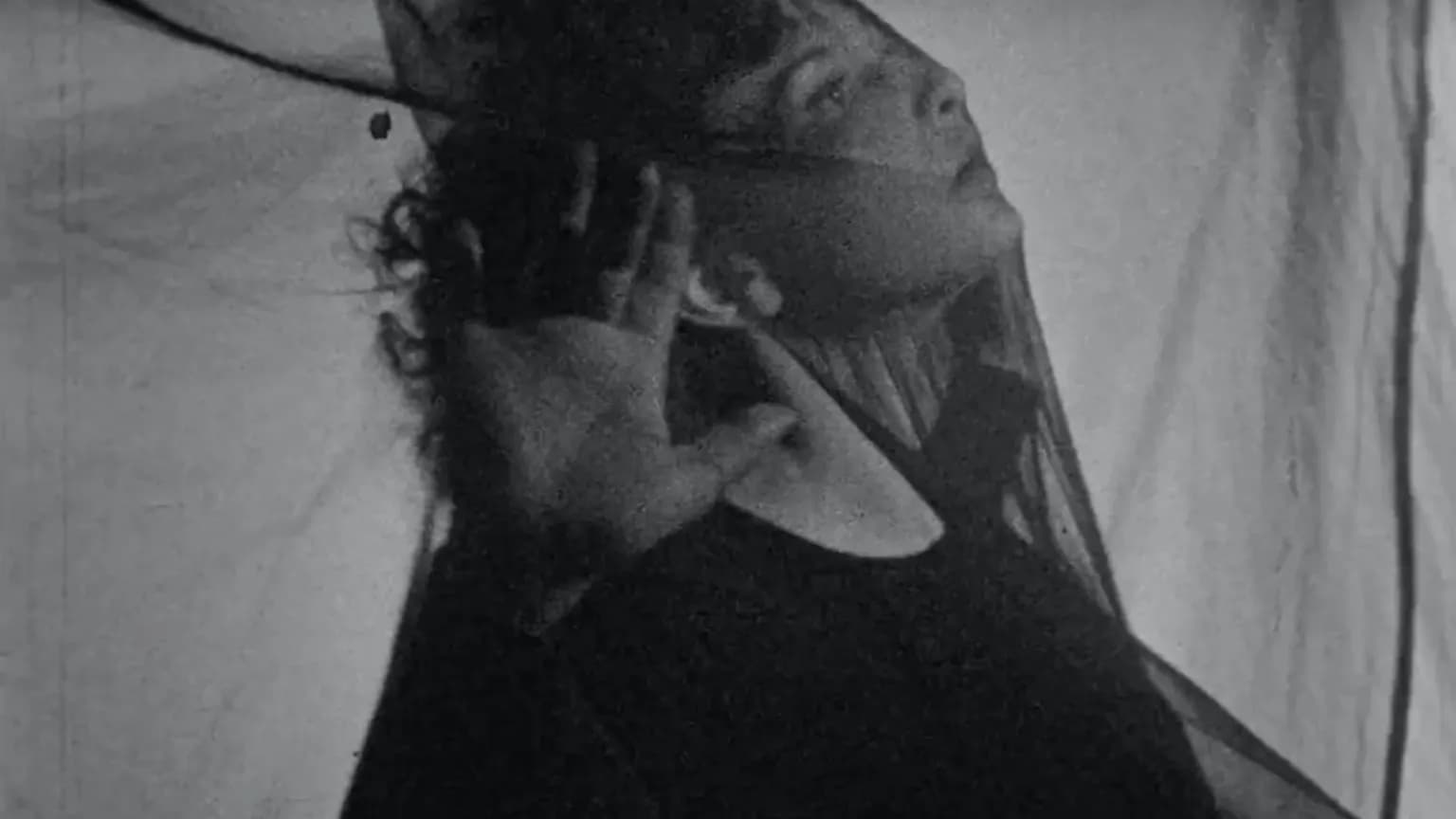
In Meshes of the Afternoon, Maya Deren carefully recreates the stifling, sleepy atmosphere of a Californian summer, constructing not so much a filmic narrative as a space of inertia, where the very medium of video makes the surrealism of everyday life obvious. Man Ray, Buñuel, and Hans Richter also turned to the theme of Los Angeles space in their experimental films — for example, in Los Angeles Sewer, a short film about a girl stuck in a dung heap between a highway and a desert. The surrealism of avant-garde experimental film is that same surrealism — impossible without Hollywood — that explores the futility of California’s cultural landscape and flees from it into artificial fantasies.
It’s possible to say that experimental film builds upon the surrealism created by Hollywood culture and explores it through the first attempts in history to move film from the theater of consumption into the space of critique, by marginalizing video as an artistic medium. For Man Ray, being part of the Hollywood industry was “like trying to start a new religion in a country full of cults and temples.” But that industry created the dynamic trajectory that pushed artists toward avant-garde reflection on bourgeois American culture.
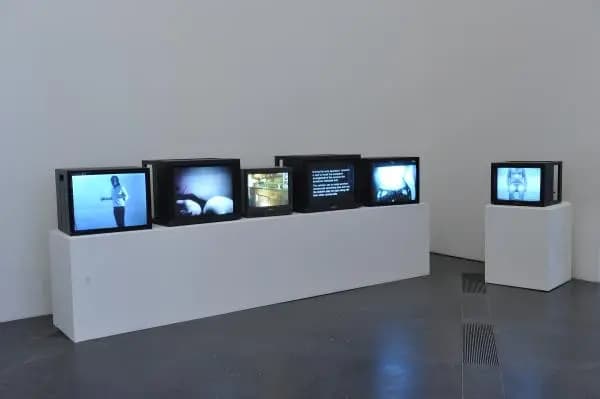
Selection of videos from Electronic Arts Intermix, Los Angeles County Museum of Art, gift of the 2016 Collectors Committee with additional funds provided by Steve Tisch, photo by Donato Sardella/Getty Images for LACMA
Another question is whether avant-garde film can be considered a predecessor to the video art of the 1960s. The principles of surrealism indeed sound strikingly similar to the conceptualism of Warhol’s videos, which were often dedicated to exploring the Hollywood environment and its artistic circles. In contemporary art, experimental film and video art are typically distinguished in art historical discourse by the space in which they engage with the viewer—whether in a gallery or a cinema. Within this classification, drawing parallels between Dada films and the video art of the 1960s becomes impossible. However, the very existence of this classification as an elitist construct—based solely on the exclusivity of the viewing experience—serves as proof of the dichotomy between the avant-garde and kitsch within the video medium. This, in turn, drives video towards underground art, separating it from cinema precisely through its dialogue with it.
Of course, it would be incorrect to claim that video art historically evolved from experimental film, but it is impossible to deny that the very idea of appropriating video—an inherently elite Hollywood technique—and "removing" it from the theater and onto the streets is a thread that unites both genres in a shared opposition to Hollywood, sitting on the Walk of Fame and gazing at the neon marquees from an outsider’s perspective. The culture of underground video-making in Los Angeles actively employs Hollywood’s technologies because it was raised within them and, in turn, reinterprets them—transforming the dichotomy into a dualism.
"Videos from California are so fascinating," says Glenn Phillips, Senior Project Specialist and Consulting Curator at the Getty Research Institute. "Many of my favorite videos might seem dry to others because the artists work with complex, technology-based ideas. Artists in California can use technology just as intricately, but they do so in a way that is funny, engaging, and visually striking."
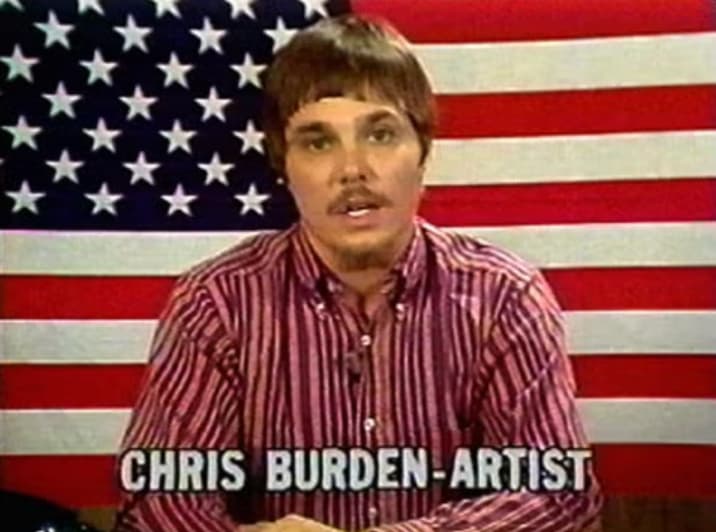
The dialogue between Hollywood and video art has remained not just conceptual but deeply cultural over the decades: Salvador Dalí shot scenes for Hitchcock, Warhol mingled with the Hollywood bohemians of the ’60s and filmed videos for them, Chris Burden created his video art in the format of commercials and broadcast them on television. The history of video art in Los Angeles is not a story of postmodernist negation—it is a history of long and fruitful interactions between elitist Hollywood and marginal Hollywood, where tracing a hierarchy of influence becomes impossible because they coexist in the same space in a symbiotic process. A process of dialogue, borrowings, playful subversions of social frameworks, and experimentation with the technological limits of film and video production.
The TV commercials// Chris Burden
This is why, if you one day walk down the Walk of Fame and try to look at your feet, you’ll feel it: Hollywood in [insert year] isn’t a place. Hollywood is the story of how the strangest, most different, and most hopeless people enter into dialogue with each other — because at some point, they all fell in love with the idea of freedom through fantasy, which can only exist in timelessness and chaos — and learned how to realize that fantasy through a movie camera.