Essay6 min read
Kitsch Is the New God: From Bad Taste to Concept
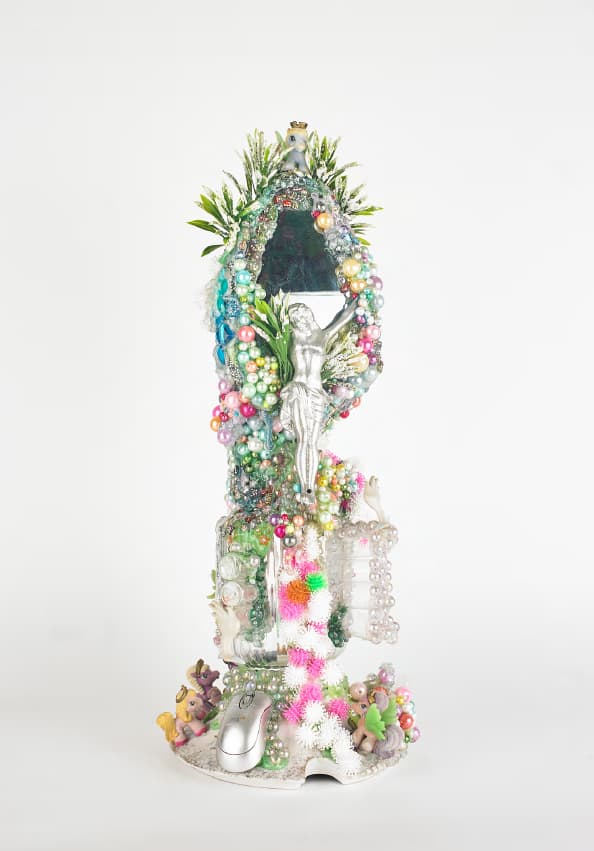
Hypermonalisa — crucifix fused into an amalgam of toys, beads and plastic
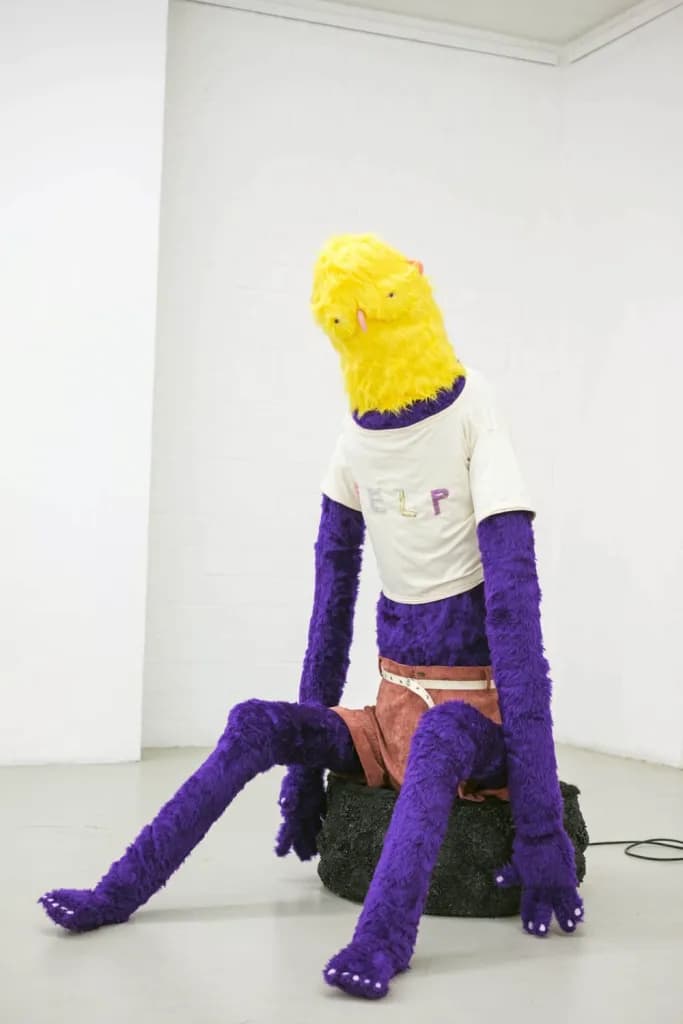
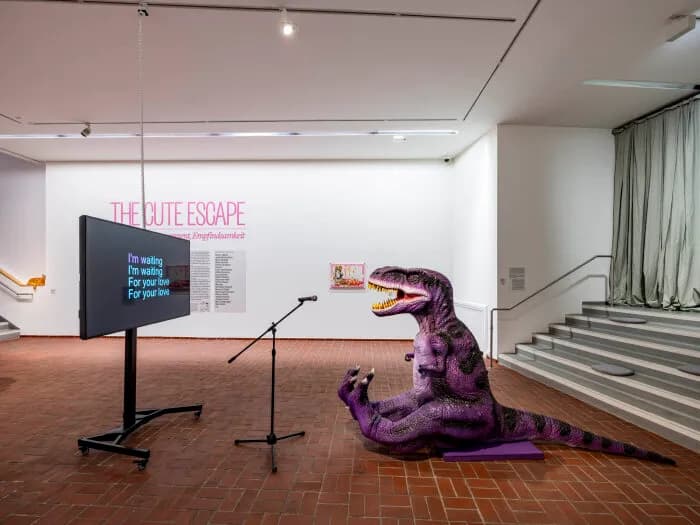
A crucifix fused into an amalgam of children’s toys, cute ponies, shiny beads, fake plants, knives, and plastic syringes. What is it? Blasphemy, mockery of contemporary art, an ironic statement—or an invitation back to childhood? A large purple-and-yellow anthropomorphic figure with a silly face, a crooked white T-shirt, and a loosely buckled belt. And that? Another work riding the textile hype, a rethinking of corporeality, or a memory from the past? A life-size dinosaur singing karaoke: a banal audience game or a reinterpretation of autotune?
I first saw the works of Hypermonalisa, Teresa Rothe, and Monira Al Qadiri at the exhibition Cute Escape, which opened this spring in Erfurt, right in the heart of Germany. After the show, my friend—who never liked contemporary art—shrugged and said: “It’s cute, just a bit kitsch.” Which, honestly, was a success: the exhibition, after all, explored the very idea of cuteness and kitsch. Over the following months, I kept seeing more and more works that could be described in my friend’s simple words. So I started to wonder: when is “cute, but a little kitsch” actually cool—and when is it not? And what even is kitsch in the twenty-first century?
Kitsch Is Bad
So, let’s assume this kind of sweet art is cringe—or rather, kitsch. Kitsch, from the German Kitsch (cheap, tacky, “low-quality stuff”), means chubby garden gnomes, Bob Ross paintings, travel magnets, and symmetrical but painfully ugly things. In short, kitsch is the opposite of real art: it can’t be interpreted, it repeats what the viewer already knows, it’s easily reproduced. And the viewer immediately feels something—tenderness, joy, nostalgia—and just as quickly recognizes it. Kitsch is essentially an emotional bomb, a kind of sentimental pornography that excuses the lack of meaning or originality with an intense emotional reaction. But isn’t provoking emotion one of art’s main functions?
The term “kitsch” appeared in the late nineteenth and early twentieth centuries as a cultural symptom of industrialization and urbanization. Peasants who moved to cities—losing touch with folk culture and newly literate—grew bored and began demanding bread and circuses. Thus, kitsch was born.
Here’s where it gets strange: kitsch seems to be an art form with a lower entry threshold, made for a specific class—workers united by income, lifestyle, and, critics claimed, a shared attitude toward art. Their choices—cute cherubs, painted plates—became synonymous with kitsch and philistinism. But then, aren’t baroque angels and decorative crafts also kitsch? Or are they just an earlier stage of classical art? And what, then, separates the baroque angel from the kitsch one—only that the latter is mass-produced, cheap, and for the poor, while the former is expensive and for the rich?
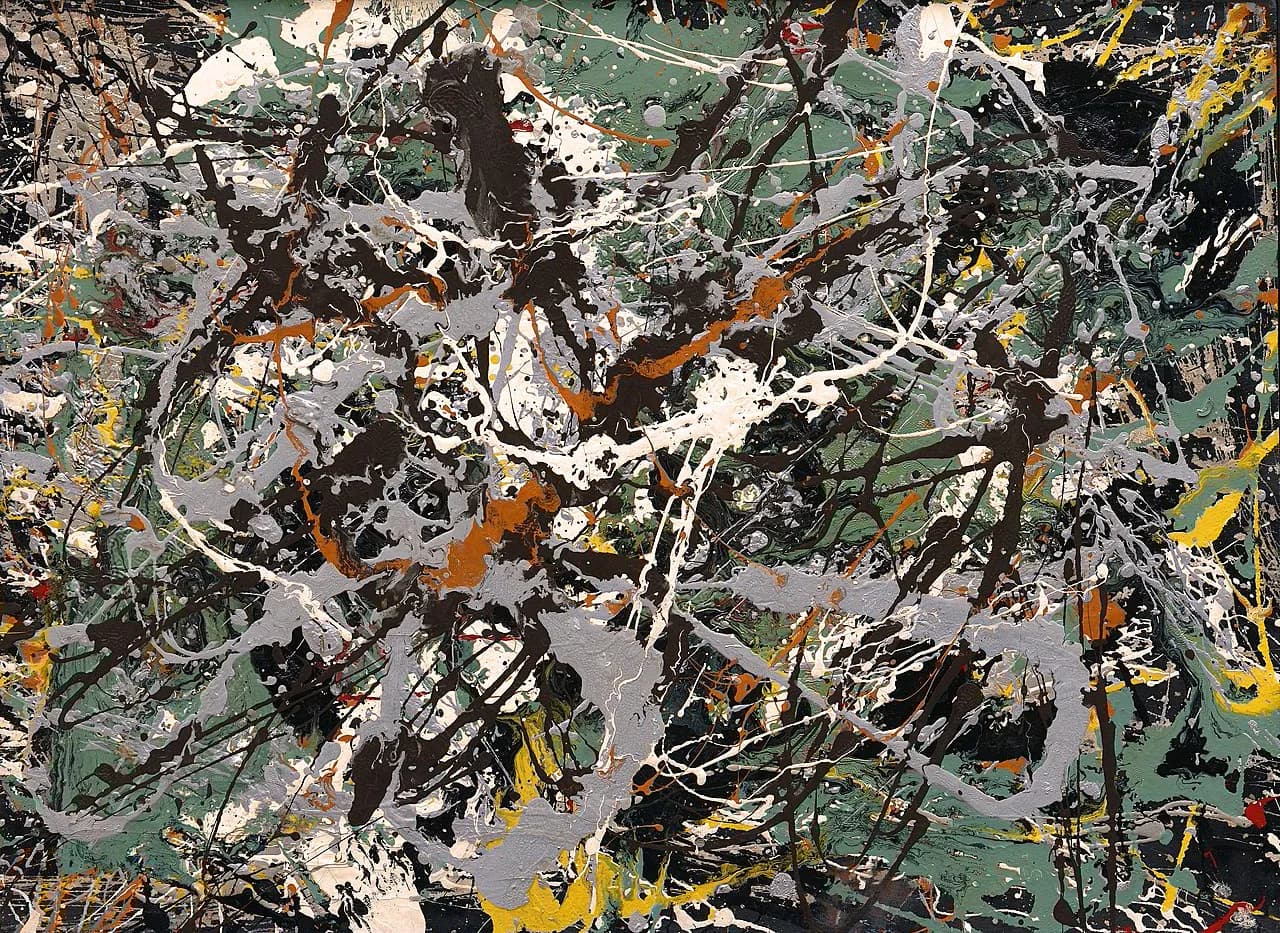
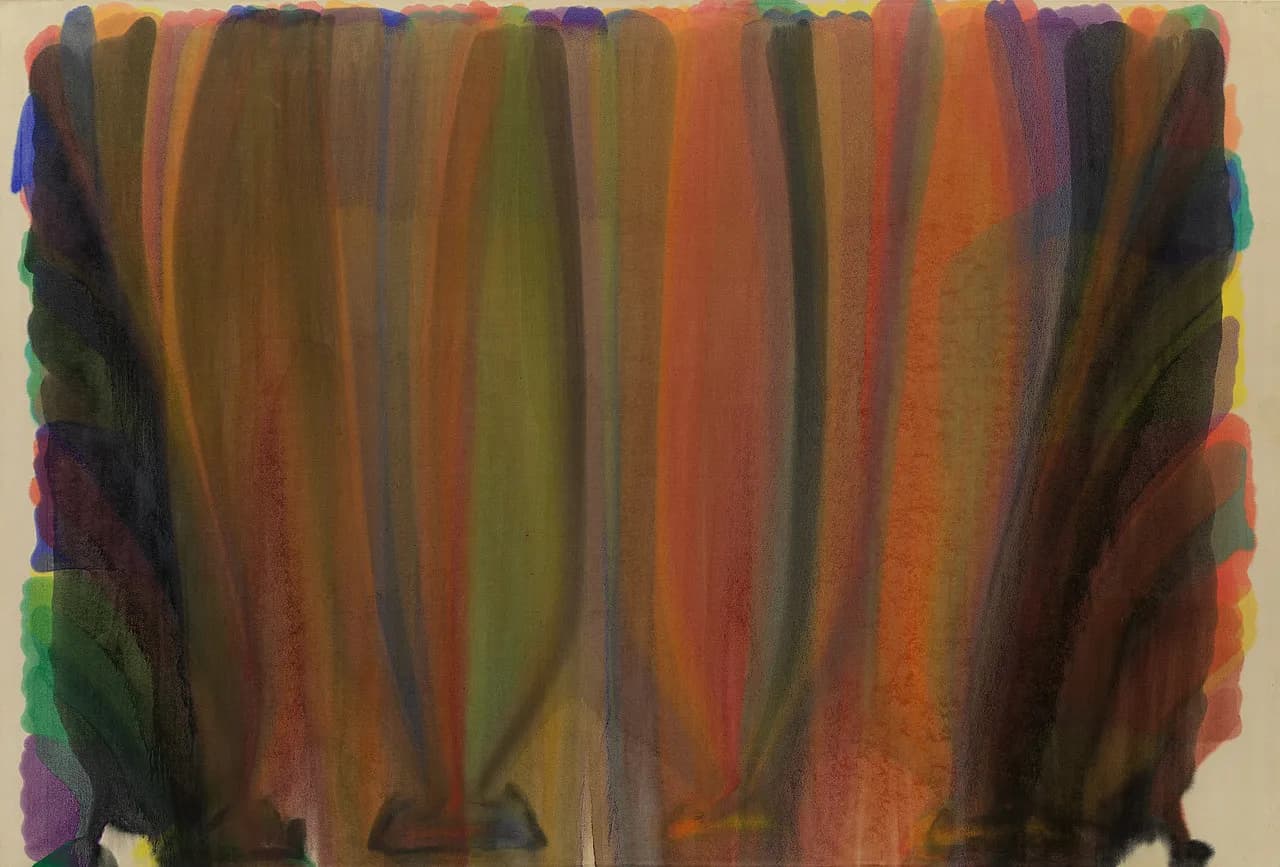
One of kitsch’s greatest critics, the American essayist Clement Greenberg, in his pursuit of “true high art,” effectively banned realism and imitation. A formalist, he considered the pinnacle of art to be abstract expressionism—think Jackson Pollock or Morris Louis. For Greenberg, after the invention of photography, painting had to focus on its own pure form, its unique qualities and tools.
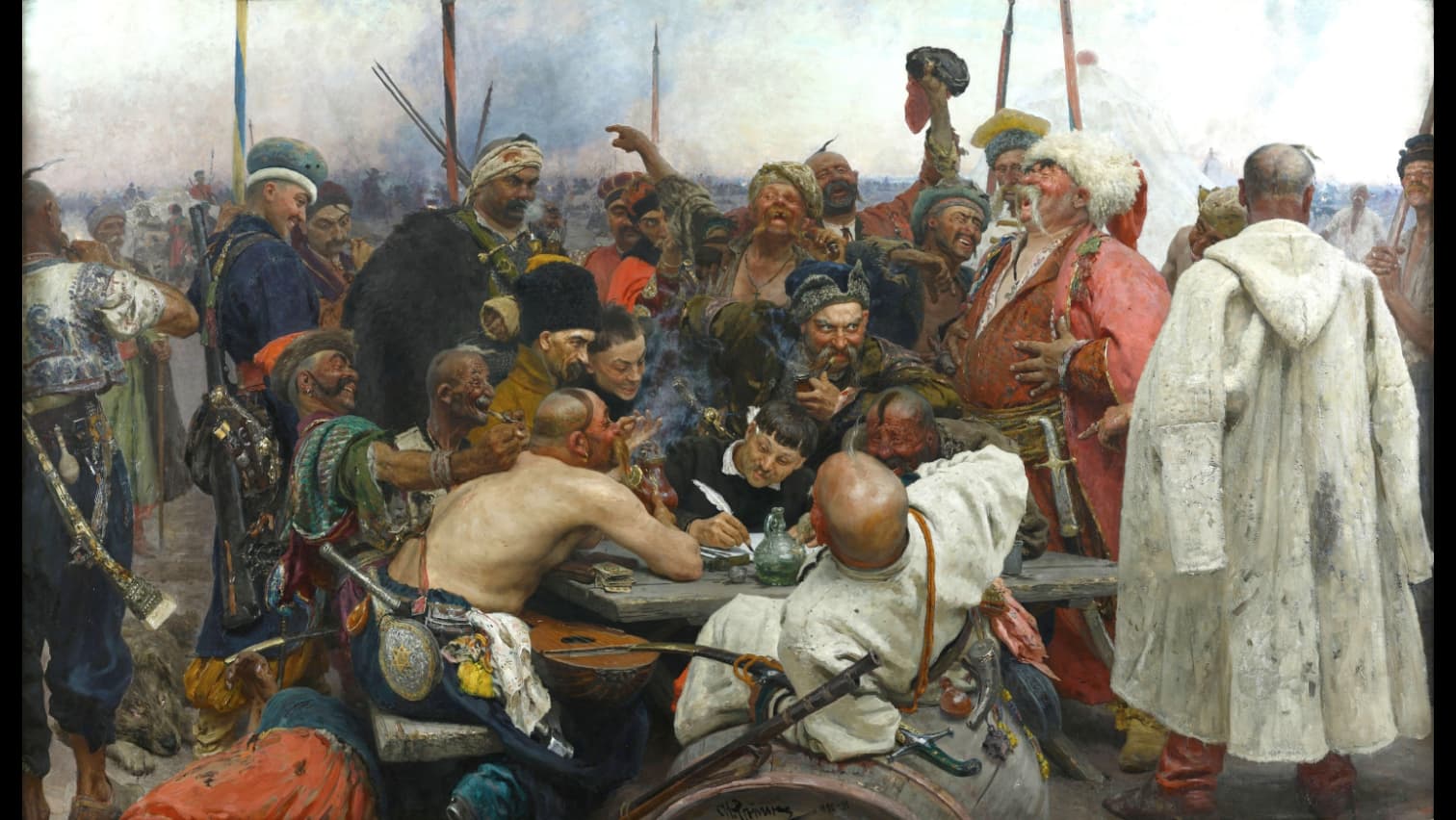
In his 1939 essay “Avant-Garde and Kitsch,” Greenberg even takes a jab at our universally beloved Ilya Repin. He ponders why the Soviet worker chooses Repin’s “kitsch” battle scenes over Picasso’s avant-garde abstraction. According to him, Repin digests art for the viewer and offers an easy shortcut to pleasure.
So classical painting can and should appeal to representational, comprehensible imagery—but for modern art, it’s forbidden? And anyway, Repin never actually painted battle scenes! Greenberg’s critique of kitsch becomes kitschy itself—and, moreover, politically charged. Abstract expressionism, a movement flourishing mainly in the United States, came to symbolize civic and individual freedom, democracy—while figurative art was tied to socialist realism, communist nations, and so-called totalitarian art.
Once again, kitsch ends up describing not art, but the people who are supposed to like it. Essentially, kitsch is labeled “art for the poor,” for those living under communism or fascism. But is all realist art propaganda? Is all Soviet art socialist realism? And maybe the love of trinkets and petty pleasures was the only real form of personal freedom available to the Soviet person with no property at all?
Kitsch Is Good
In 1977 and 1978, Andy Warhol, following an old Russian tradition, began frequenting New York’s public bathhouses. Wandering through the steamy rooms, he looked for men and invited them to his studio. They came, dropped their pants, and urinated on canvases coated in copper paint. The oxidation stains slowly began to resemble Pollock’s drip paintings. Abstract expressionism had long since given way to pop art.
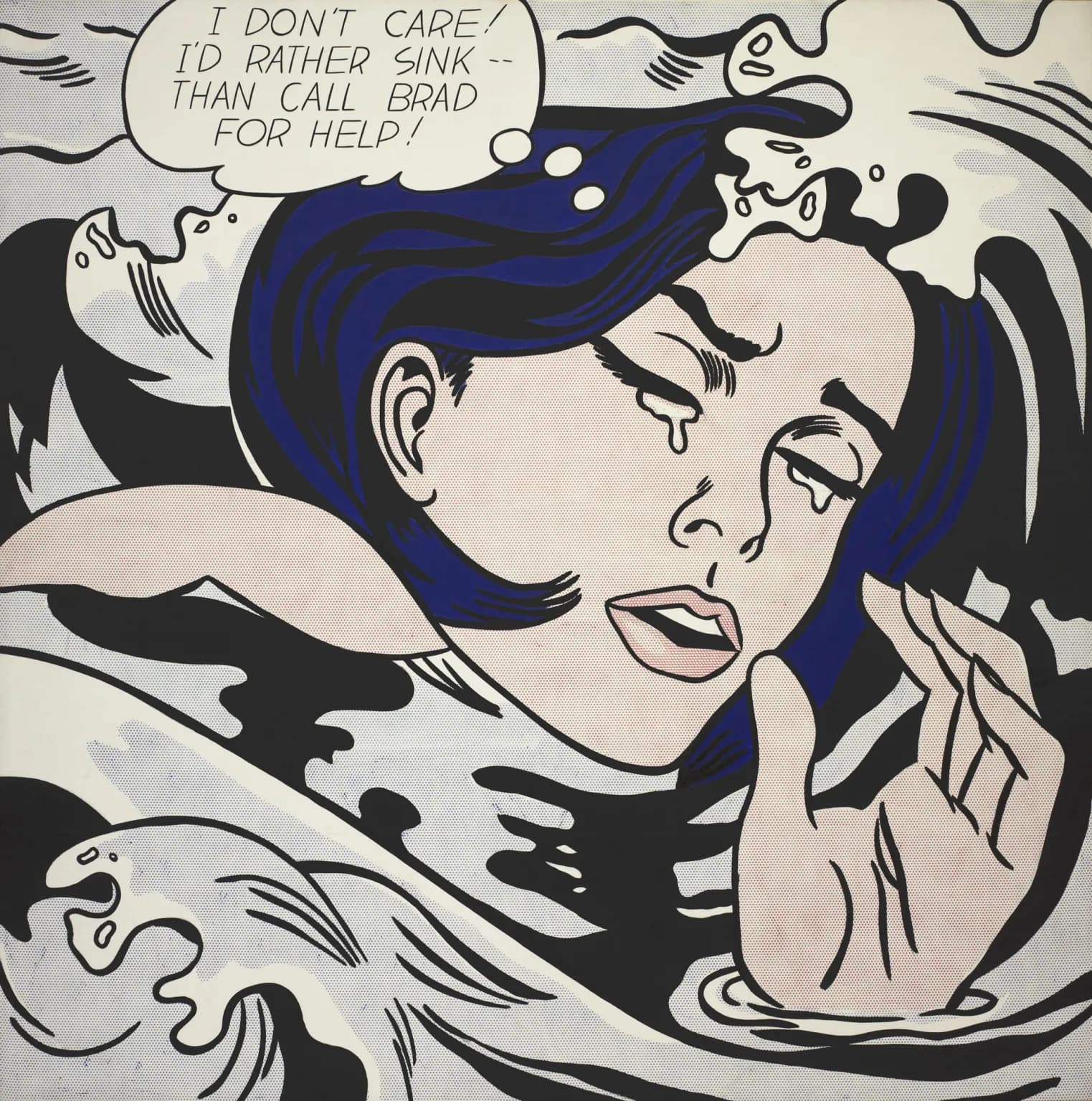
In the neoliberal world, consumer goods became more than just products—and Warhol captured this transformation perfectly. Under the reign of consumerism, canned soup achieved the status of a near-sacred object. Kitsch became an integral part of pop art and, by the 1970s, the driving force of postmodernism itself. Art no longer aspired to be inaccessible. And today, we’d probably call kitsch not comic books or Roy Lichtenstein’s paintings, but tacky children’s toys, cheap Chinese trinkets, and brightly colored calendars.
After Susan Sontag’s Notes on Camp, kitsch was fully legalized in art. Camp—with its celebration of contradiction, excess, and theatricality—rejected meaning altogether, sacrificing substance for style. Camp made bad taste—that very kitsch—even more conceptual. Just look at Jeff Koons!

Kitsch Is Whatever You Want It to Be
The borders of kitsch are constantly expanding, yet something will always be called kitsch in a negative sense. Moreover, everyone defines those borders differently. Personally, I prefer not to call even the worst bad taste “kitsch.” If you place an object in the right context, express your own attitude toward it, twist it a little, work with it—it might well become art. The only catch is that these manipulations are essential. Sergey Kuryokhin once needed just a spark, a thought, to turn a porcelain elephant into a cure for heroism.
Kitsch Is Kitsch
What once was art can become kitsch; what once was kitsch can become art. Theorists’ nightmares have come true. Dividing art into “low” (kitsch) and “high” (art) strips the latter of some of its most important functions—like the simple, joyful connection between artwork and viewer. The very idea of hierarchy feels classist: calling one thing “high art” and another “low” reeks of snobbery.
On the other hand, even a seasoned viewer would struggle to call a bright, tasteless landscape sold at a Moscow metro underpass “art”—but you can’t really call it kitsch either. The problem, perhaps, is that real kitsch doesn’t hide what it is; it flaunts it. Those generic landscapes, though, borrow art’s external features and try to mimic it. The result is neither this nor that—a kind of deceit. But maybe it’s not kitsch at all. Maybe it’s just bad art.
As a movement, kitsch art in postmodernism feels refreshingly new. With its unrestrained, over-the-top sentimentality, it throws us back into childhood—to 2007, to the era of Barbie and Bratz, to the pre-internet world. The crucifixes of Hypermonalisa indeed collide religion with plastic, but they also appeal to a viewer exhausted by endless concepts and ideas—with their simplicity, their apparent stupidity. Apparent, because the artist’s objects are, in fact, deeply contemporary: layered, self-aware, and reflective of her world. They work on both surface and depth.
Kitsch, in essence, returns us to a primordial state, when art was intertwined with cult and ritual. It always draws from collective worship and mass consumption, making art accessible to everyone. Meanwhile, “high” art seems to demand solitude and private contemplation—contradicting its original communal purpose. Kitsch allows everything: you can pray to it, fear it, hate it, love it. Kitsch forgives all. And in that, it is not unlike God.