Interview4 min read
From Finance to Art. Interview with Alexander Aburanem
Alexander Aburanem, work on metal. Photo: Daniel Hanoch
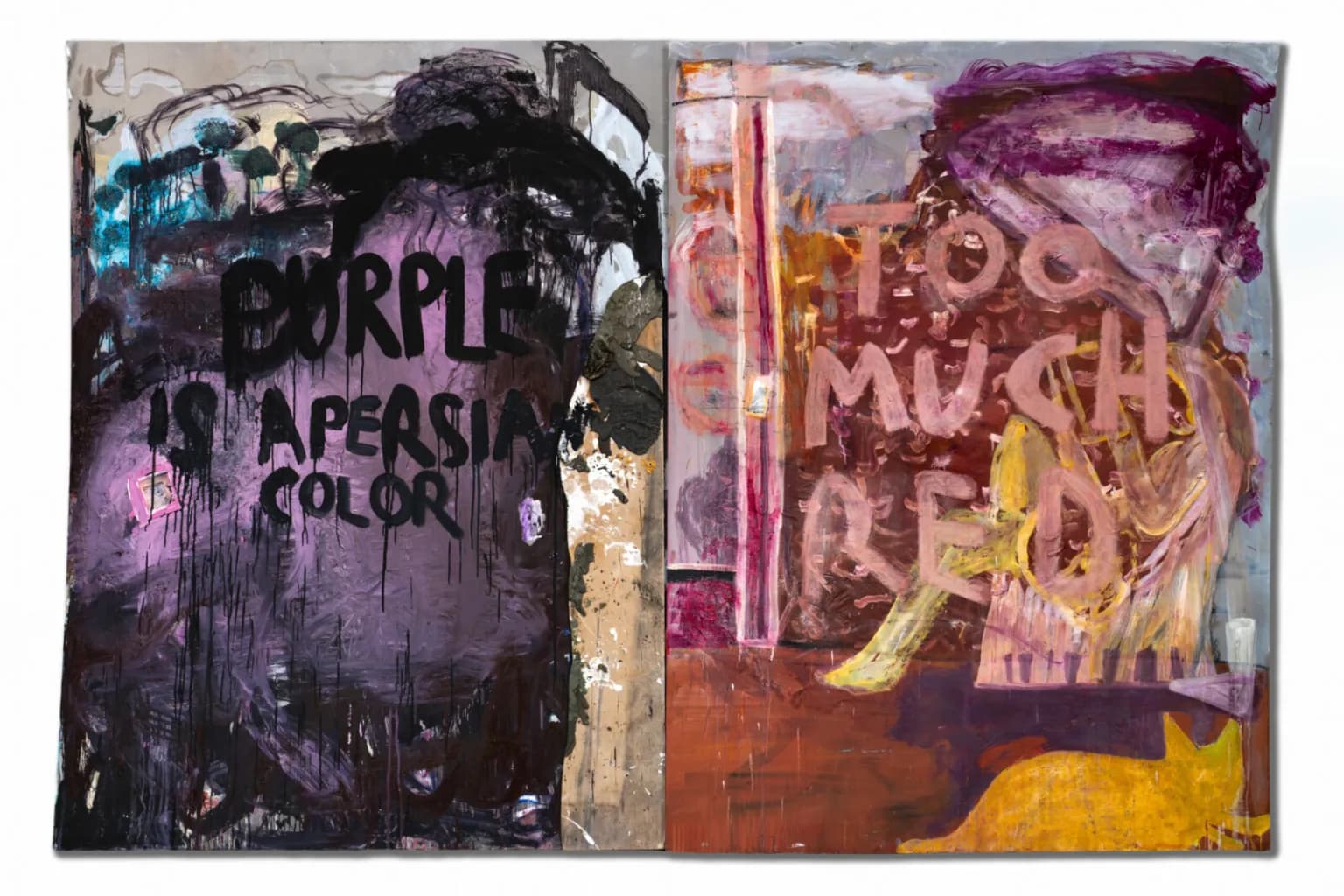
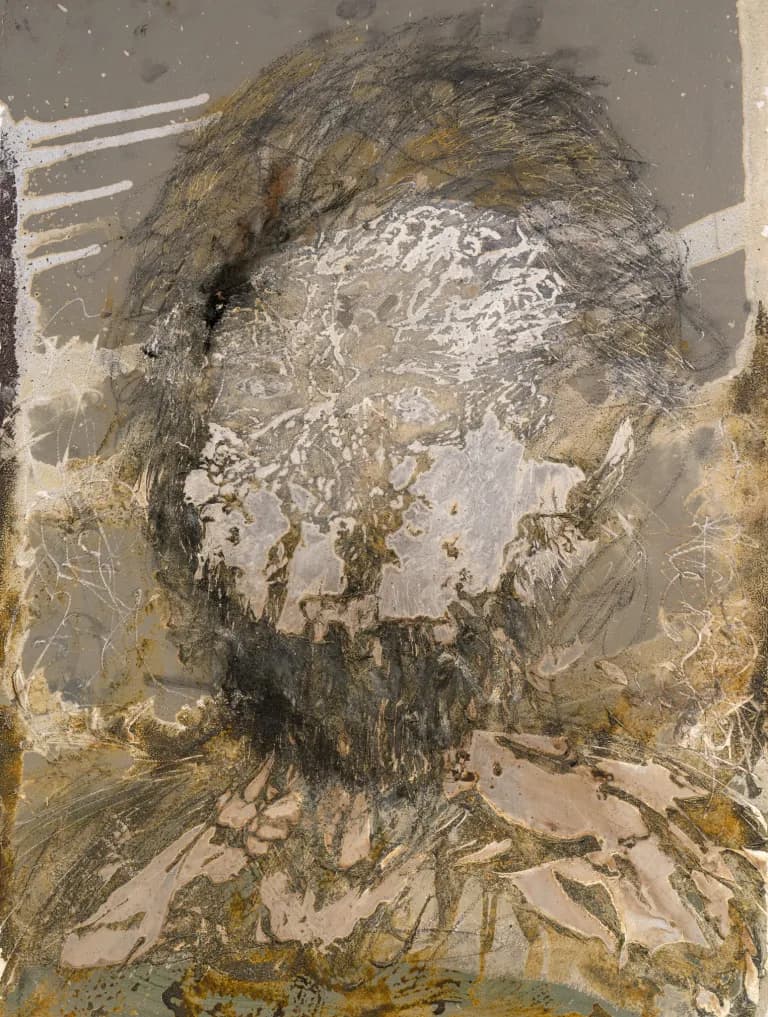
Alexander Aburanem doesn’t have the typical way of a contemporary artist. There are no prestigious residencies or decades of group shows on his CV; instead, there is a Master’s in Economics and a high-stakes past in private banking. His work is a physical battle. He cuts, burns, and hammers industrial surfaces.
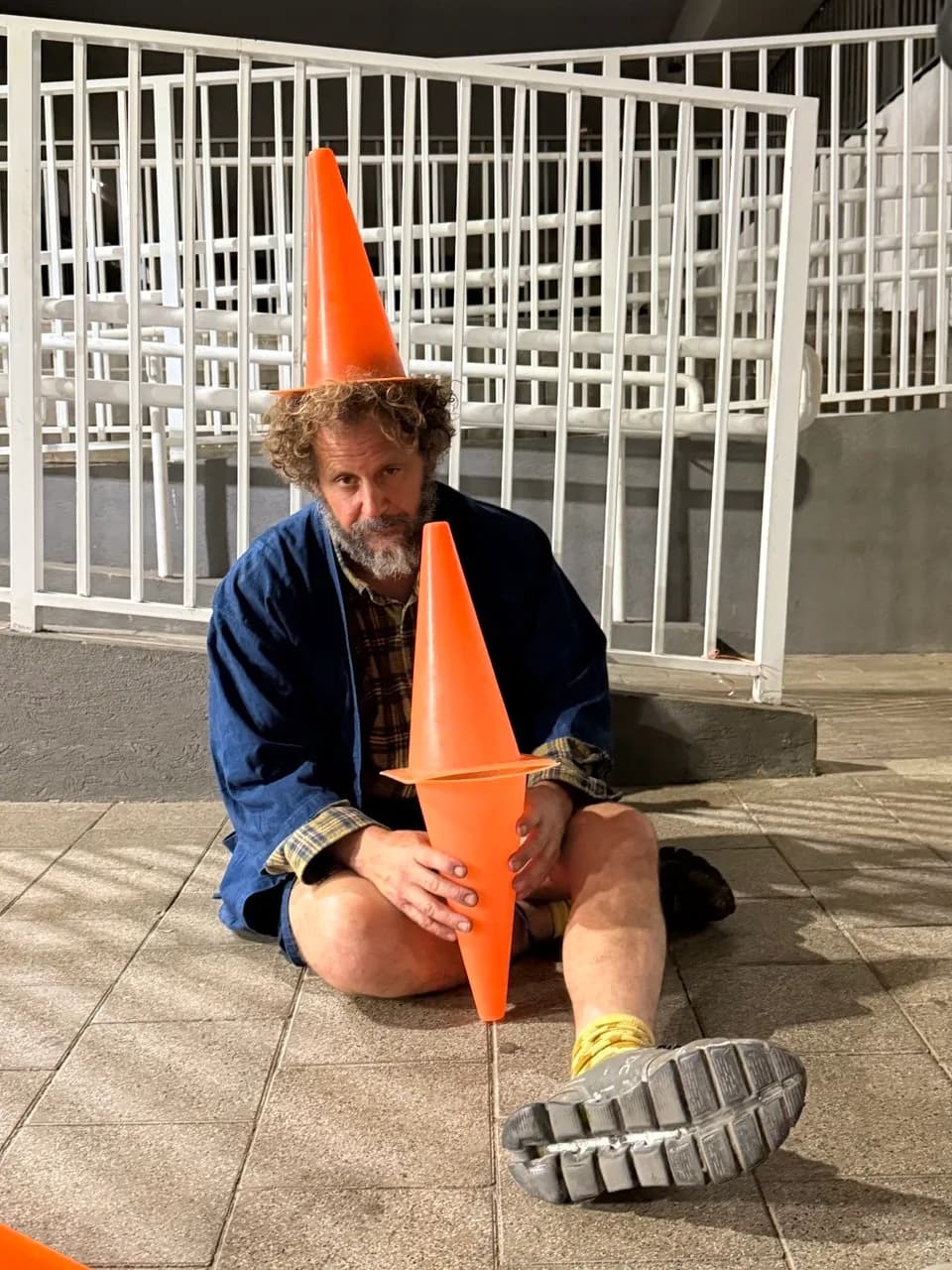
You often joke about not having a traditional artistic CV. No long list of group shows or residencies. Instead, your background is in International Relations and Economics. How did that transition happen?
It’s a bit of a “chicken and the egg” situation. I don’t have a formal CV because my upbringing was in a completely different field. I have a Bachelor’s in International Relations and a Master’s in Economics. I spent years opening and selling companies. It was like a first marriage. I’m on my second one now…with art.
Before becoming a full-time artist in 2015, I worked in private banking. That was my “back door” into the art world. I was buying high-end art for some of the wealthiest people. I worked with major global galleries, seeing how the industry functioned from the inside. But eventually, the need to create outweighed. I closed myself in the studio and just started working.
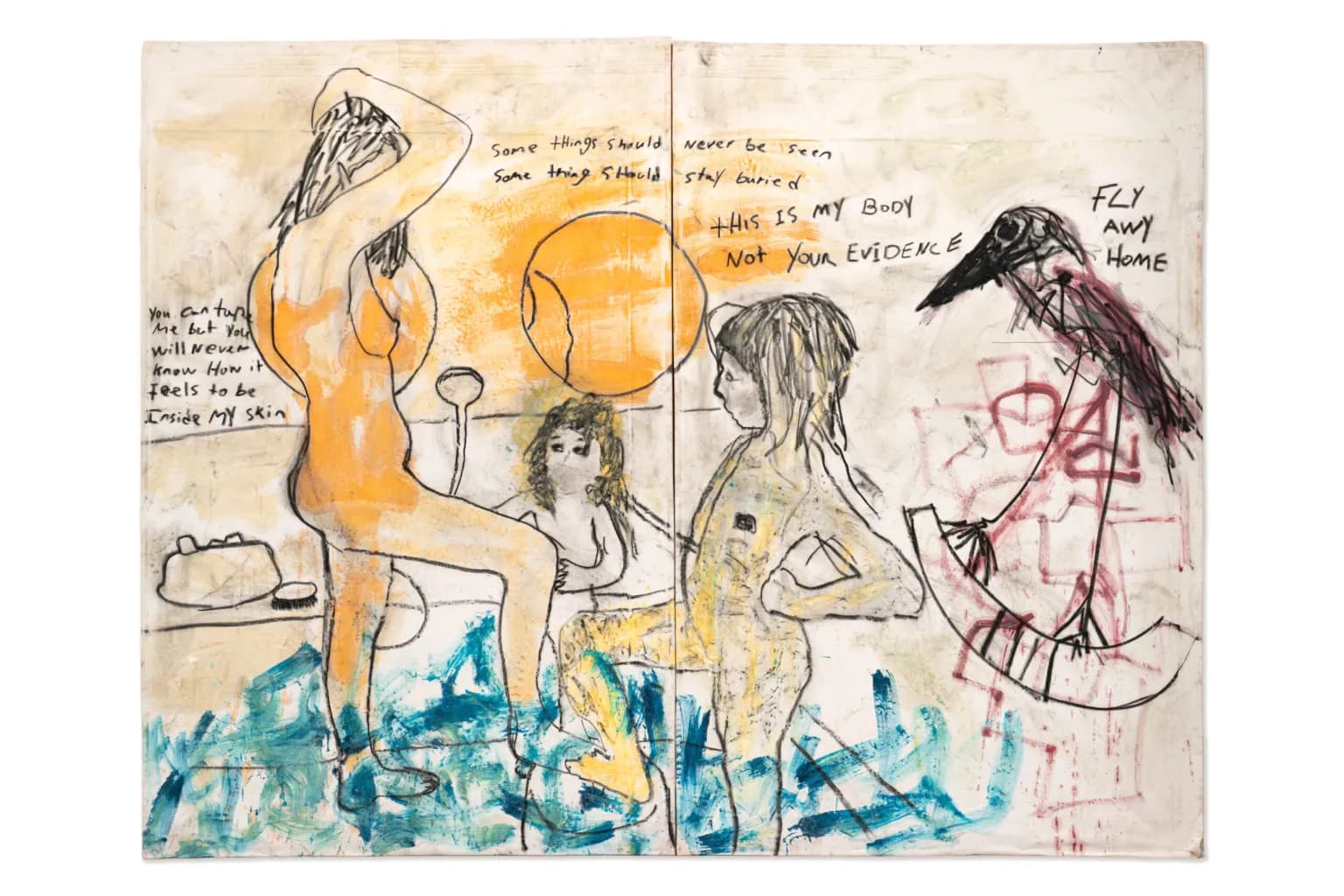
You are known for working on massive scale canvases and metal sheets reaching up to six meters. Why is size so critical to your process?
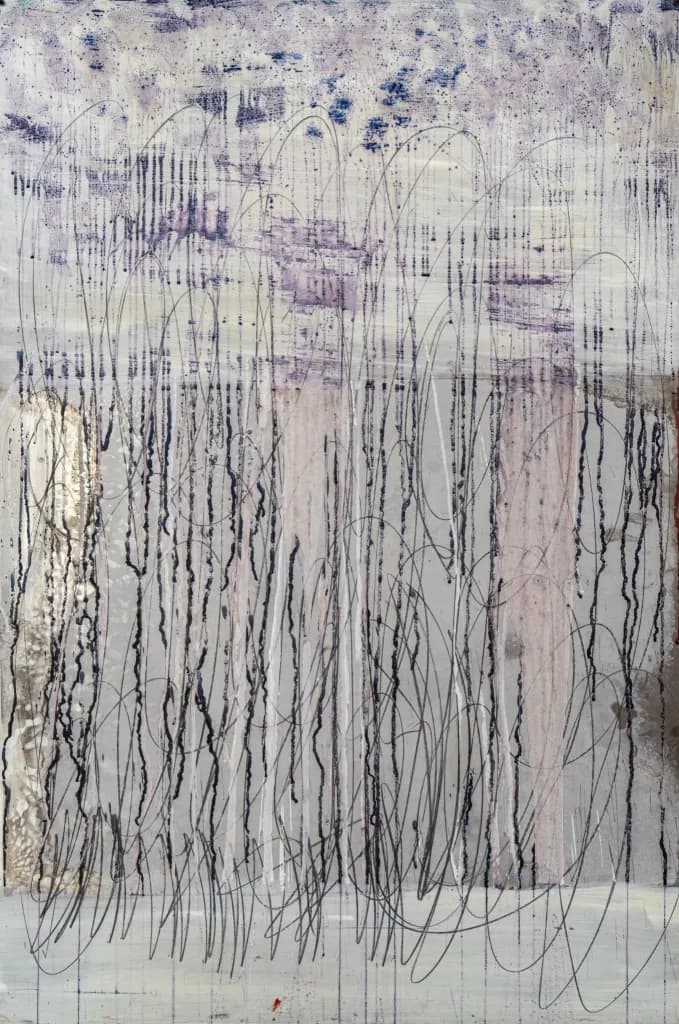
It’s about the loss of control. When you work small, you are tidy; you stay in your head. But with a large format, you can’t see the whole thing at once. You enter a meditative state. I’ll start a piece and wake up hours later, physically exhausted, with a finished work in front of me.
I use an economic analogy for this: The Stock Market Chart. If you look at a daily trading chart, it’s jagged, chaotic, and full of mistakes. If you look at a monthly chart, it smooths out. But if you look at an annual chart, the tiny failures disappear into a harmonic line.
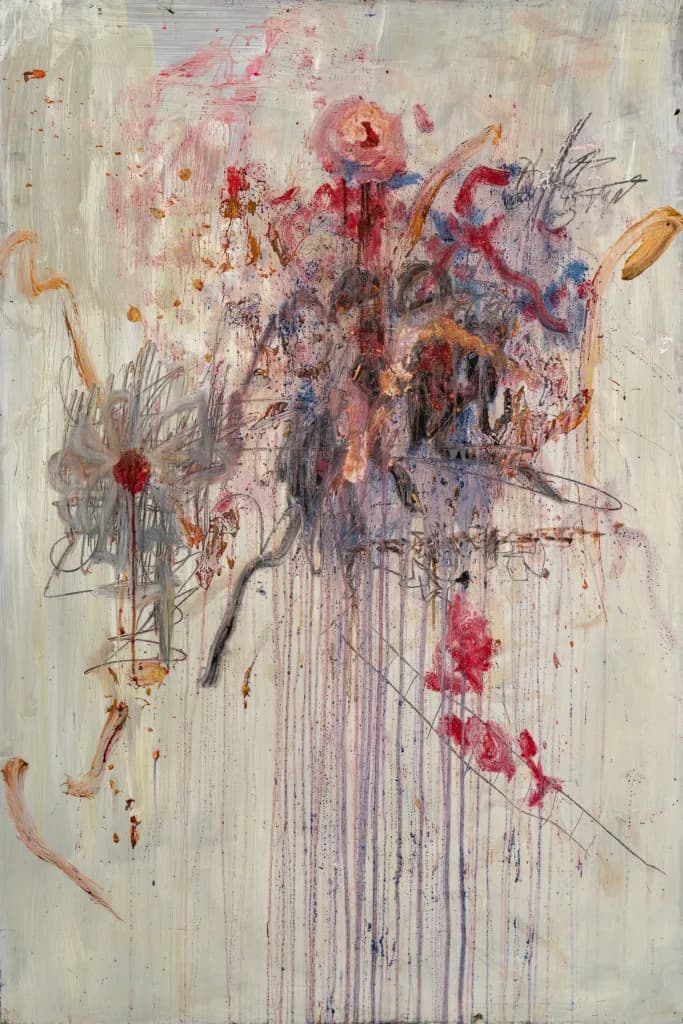
My large scale is like an annual chart. I can make a thousand “mistakes”, a flower becomes an animal, an animal becomes a cloud, but on that scale, those movements become a unified, harmonic language.
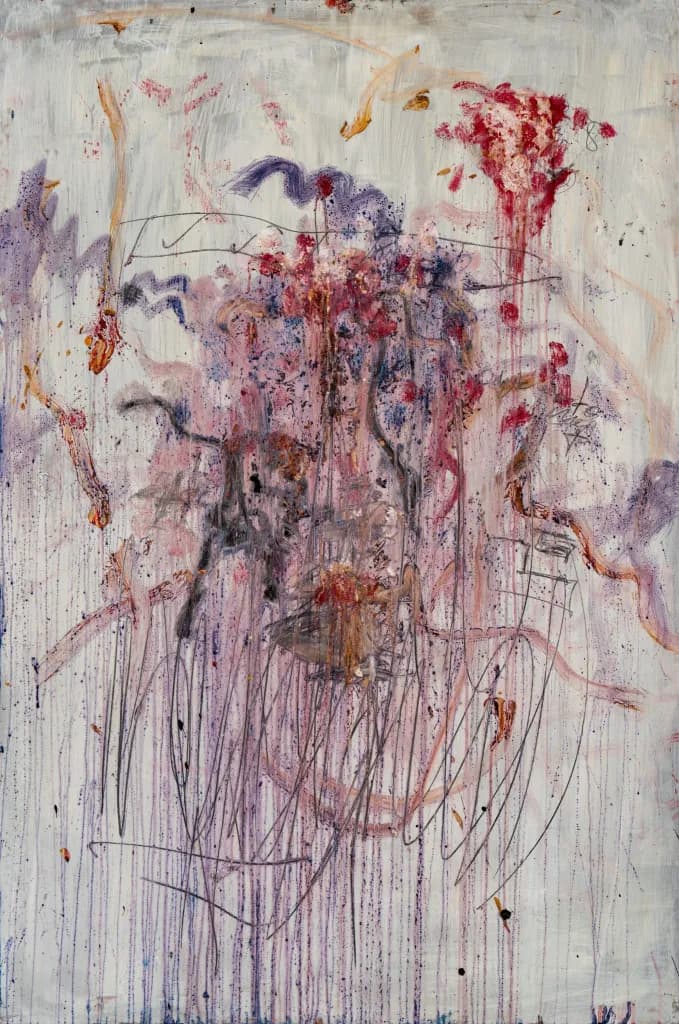
Your use of metal is visceral. You don’t just paint on it: you cut it, hammer it, and burn it. Where does this industrial aggression come from?
My physicality is too much for canvas. I used to tear them under the pressure of my work. I needed a material that could fight back. But the connection is deeper than just durability.
From the age of six, my father took me to work in a metal machining factory. I worked on those machines for years, and the smell of the metal and the grease was buried in my memory. I had actually forgotten about it until a collector asked me why I work with metal. It’s a psychological return to my childhood.
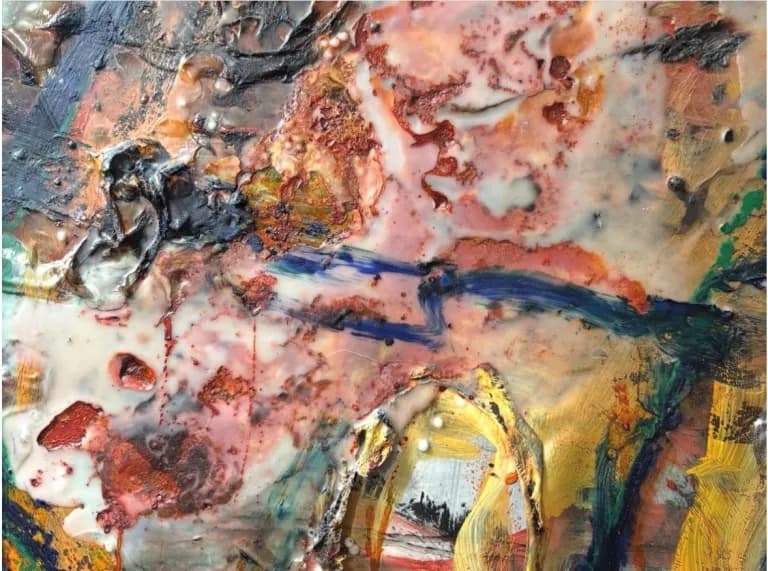
I use a dremel to cut the surface, hammers to create dents and bumps, and I burn plastic and wax directly onto the sheets. Metal has a shiver; it reflects light and vibrates. I even love the sound of it. If I ever have a museum show, the soundtrack will be the vibration of the metal moving.
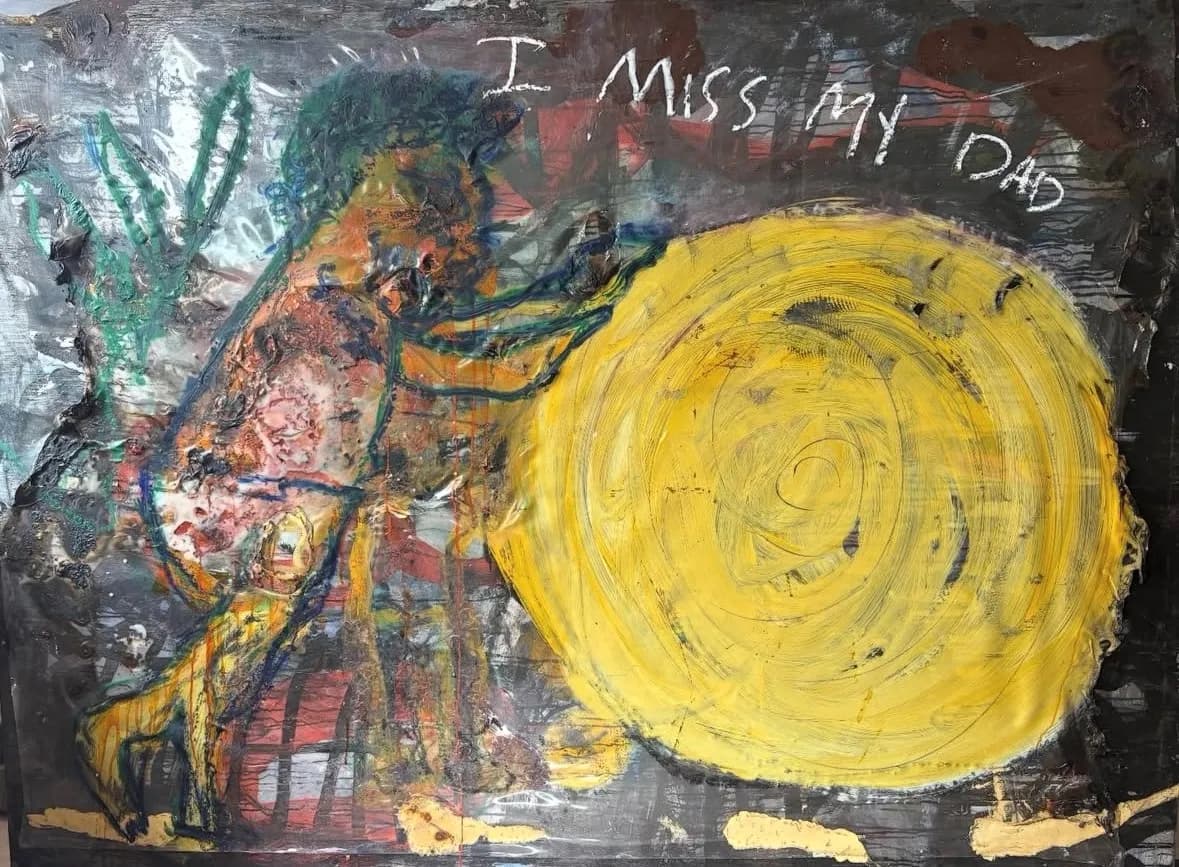
In one piece, you wrote “I miss my dad” among the layers.
That line came out during a session where the figure was rolling the sun. I woke up one day and just wrote it. I think that it is a way to process relationship with my father. My father used to take me to a metal factory; that was our world. By using metal and creating these heavy, searching figures, I’m physically re-entering the past to understand it.
And also, you have a lot of flowers on metal.
People think of flowers as delicate, but mine are brutal. I paint them on metal with oil layers that are thick. I use fire to melt pigments and plastic onto the surface. They are an attack on the subject. I’m interested in how light reflects off a wounded, scarred metal surface rather than a pretty plant.
Curators sometimes find your work confusing because you don’t stick to one style. You move from abstract flowers to violent scenes to daily life sketches. Is there a core theme?
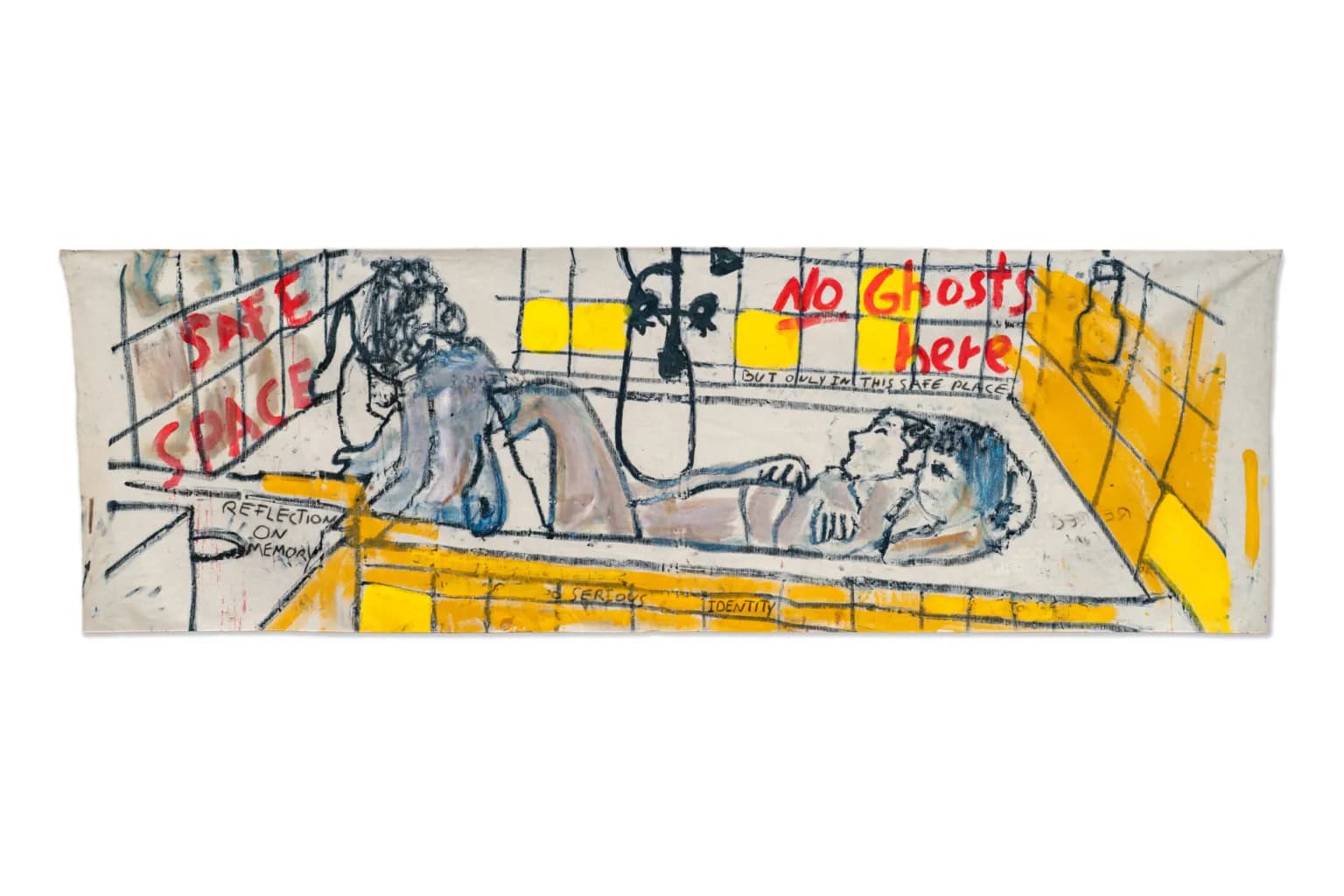
I have zero loyalty to a single ‘artistic language’. I’m only committed to how the process makes me feel. A friend of mine, also an artist, calls me a digger. Most artists find a style and stay there. I dive deep, very fast, and very intensely. I hold my breath, explore everything in that hole, and then I come up for air and start a completely new hole.
I’m not afraid to look like I’m still searching. I’d rather search forever than be arrogant enough to think I’ve found a final answer. I dive into a language whether it’s sex, trucks, or flowers until I’ve exhausted it, then I move on.